Central Florida's Real-Time Home Search
Address Search

Advanced Search
Find your perfect home
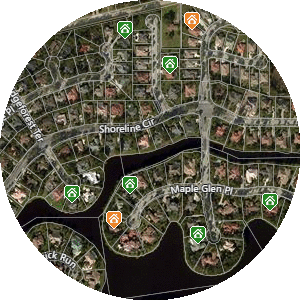
Map Search
Use our interactive map search tool

Market Reports
Get a Market Report on any neighborhood or town
Smart Orlando Home Buyers
You've found the Orlando area's most accurate and easy to use home search system.
Watch the video below to see how you'll find your Orlando area home here.




Myth: It doesn’t matter which lender my pre-approval is from, as long as I have one
The Truth: For a buyer, it’s no longer an advantage to have a loan pre-approval in hand when you submit your offer. It’s an absolute necessity. Nearly all potential competing buyers will have it too. The key is for your approval to be from a local lender that is going to be recognized by both the listing agent and the seller and one with which they will have a good level of comfort. If you shopped on Lending Tree and your pre-approval letter is from Billy Bob’s Mortgage Company in Booger Hollow, Arkansas and you’re buying a home in Orlando, Florida, you can bet that’s going to raise an eyebrow with the seller and their agent.
It’s true, real estate agents prefer you to use the lenders they recommend. They like to be in control, and there is something to be said for the element of accountability. The lender will have to answer to both the buyer and the agent. If you don’t follow your agent’s recommendation, at least be sure to get your pre-approval from a lender the seller’s agent is going to recognize. Incidentally, a real estate agent worth their weight in salt will have relationships with lenders that will allow you to get the best rate, lender closing costs, and terms and conditions. Online lending portals are filled with bait-and-switch artists. It’s just not worth the risk.
Oh, for those wondering, yes, there really is a Booger Hollow, Arkansas.
Myth #2: Zillow can give me an accurate estimate of the value of any home
The Truth: For some reason, buyers love Zillow. Ironically, Zillow has built their $10 billion empire upon the foundation of inaccurate information. They are notoriously slow to add new listings as well as remove those that have sold months ago. In addition, 10-15% of the homes for sale in the multiple listing service won’t appear on Zillow and 10-20% of the listings you see aren’t actually available for sale. Your real estate agent should be able to give you your own access portal to the MLS or at least a consumer version with 100% accurate data.
As far as their value estimates, or “Zestimates”, as they call them, they’re well aware of their inaccuracy. They admit their Zestimates are within 10% of the actual sales price 50% of the time. The best two examples of their inaccuracy I can cite are that of my own home and the home of Zillow CEO Spencer Rascoff.  On my own home, Zillow’s Zestimate was $150,000 less than what I sold it for. Rascoff sold his home for $700,000 less than the same day Zestimate. That’s a 40% margin of error on each deal. One too low, one too high. Zillow’s algorithm doesn’t take into account differences in neighborhoods, construction quality, improvements made to the home, etc. Sure, it’s fun to click on the Zestimate to see their estimated value of your own home or one you are considering buying, but it should never be taken at face value. A savvy real estate agent should be able to give you an appraisal-quality analysis of any home’s value. It takes time and work, but it’s much more reliable than a consistently inaccurate, one-size-fits-all computer formula.
Don’t Get Snookered By “Mega-Agents” And Their “Mega-Teams” - You’ve seen them. Every market has several. They’re plastered all over the local media with billboards, tv commercials, and radio shows. They have catchy slogans and tout their so-called "celebrity endorsements" (which, by the way, are totally bought and paid for). They speak in scripts formulated by their coaches and gurus focused on one goal: closing you. I heard one of these clowns on his own call-in radio show a couple of weeks ago trying to answer a question from a caller about an easement. This guy's lack of knowledge was downright cringe worthy. He spent very little time talking about real estate and lots of time talking about real estate and lots of time talking about how "blessed" he was, how nice his offices are, his endorsements from Barbara Corcoran and Sean Hannity, and how great his latest exotic vacation was. He touts himself as the Orlando area's foremost real estate expert and a top 20 agent in the nation. He's an expert alright, at self-promotion and marketing himself. Real estate expert? Not so much.
These agents don't really want to work with buyers (it's too much work) and they'll pass you, the buyer, on to one of their team "buyer's agents" or "buyer specialists". They'll convince you that you are much better off working with a team of "specialists" rather than a single agent. They'll have a specialist for every task involved in buying a home. What they don't tell you is that the left hand usually doesn't know what the right hand is doing and the buyer ends up with watered-down service, at best.
It's sad, but because of the low barriers to entry and low continuing education requirements, the real estate industry is saddled with a large number of part-time, untrained, unethical, and/or incompetent agents. Still, there are no meaningful educational initiatives on the table to raise the bar for real estate agents across the board. This lack of agent knowledge is a significant danger in itself, but when combined with a lack of competency could be destructive to your financial health.
CHOOSE YOUR AGENT WISELY! The wrong choice can affect you for years, even decades.
Myth: My relocation company will recommend the best real estate agent for me, plus the only way they'll pay my closing costs is if I use one of their referred agents.
The Truth: If yours is a corporate move and you've been assigned a third-party relocation company , they will recommend only the agents willing to give up a big percentage of their commission to pay to the relocation company as a referral fee (from 35-50% of the buyer's side commission). Do you think the most talented agents are going to be willing to work for half-pay? Of course not, and buyers usually end up with marginally competent, inexperienced agents with limited market knowledge.
Relo company counselors will always try to convince transferees that they will not receive all their benefits (closing costs) if they don't use the recommended real estate agents. This is complete bullsh*t. Relo companies don't pay those benefits, the employer does. In 33 years in this market, we've never seen an employee denied their closing cost benefit because they picked their own agent. When you hear this crap from your relo counselor, mention the phrase "waiverable condition" and see how they react. There is too much at stake for you to trust the financial consequences of one of life's biggest transactions to someone who really doesn't have your best interests at heart. Choose your own agent.
Myth: Foreclosures are a great bargain.
The Truth: Foreclosures aren't necessarily the bargain they used to be. Fannie Mae and Freddie Mac, the two pseudo-government agencies that hold the majority of the country's residential mortgages,both love to price the foreclosed homes they own above market value. If a "sucker" doesn't come along in the first month or so, they'll reduce the price and continue reducing it until the property sells. How do they get away with this? The buying public has been conditioned to think the word "foreclosure" means "bargain". If you're interested in a foreclosure that is relatively new to the market, be sure your real estate agent performs an appraisal-quality analysis of the market value. The last thing you want to do is pay more for a property than it's worth, plus have to deal with the deferred maintenance issues that you typically get with bank-owned properties.
In addition, most foreclosures come with additional closing costs you would not incur if you were buying from a private seller in Florida. Besides the real estate commission, documentary stamps or "doc stamps" on the deed are the seller's biggest closing cost. They amount to 70 cents per $100 of the purchase price. However, Fannie Mae and Freddie Mac's charters exempt them from taxation by any state, county, or municipality. The buyer must bear the burden of this closing cost. On a $400,000 house in the Orlando area, this would amount to $2,800. The cost of the owner's title insurance policy is the other substantial item typically borne by the seller. Fannie Mae and Freddie Mac will pay this cost, but only if you agree to use their closing agency, which is typically a south Florida law firm notorious for inflating other buyer title costs as well as being stubborn about returning buyers' earnest money deposits if a deal falls through.
I'm not saying you can't find a real bargain with a foreclosure. You can, but you must be aware of the additional costs and the potential pitfalls. Your agent should be familiar with these practices and know what to avoid.
Negotiation - Buyers often ask me "what will the seller take?". It's one of those questions to which there's just not a good answer. Without a direct statement from the seller or at least a hint from the seller's agent, the best we can do is guess. We can, however, make that guess an educated one. More times than not, we won't know the seller's personality or the sum total of their life experiences. There are plenty of clues about the seller's motivation to be found if you know where to look. The amount of public information online along with the advent of social media has made intelligence gathering much easier than it used to be. Sometimes, there are clues in the home itself. Are there only one person's clothes in the master closet? (divorce) Did the seller leave relocation papers or an appraisal in plain view on the kitchen counter? (job transfer) If the home is in immaculate shape, perhaps the seller is less willing to negotiate. And don't forget the most important factor: How does the price compare to market value? There are, of course, more factors to consider than just price when it comes to real estate negotiation. Closing costs, closing dates, repairs, warranties, pre or post-occupancy can all come into play.
It's worth mentioning that we are currently in a seller's market in the Orlando area. Inventory remains relatively low and there is high demand. So in a seller's market, if a home is priced appropriately according to the recently sold comparables, how do you formulate an offer if you don't want to pay full price. Ideally, you'd like to find the lowest possible number that won't trigger a defensive response from the seller. A defensive response is one in which the seller counters your offer at the listed price doesn't respond at all. Some may call this the magic insult line. If the seller is not going to accept your initial offer, you at least want them to respond in a positive way and show a willingness to negotiate. In a seller's market, an ideal number would be one that is less than the seller wanted to accept, but one they feel that counter offering might be considered petty.
Myth: A 4 point inspection will lower my insurance rate.
The Truth: A wind mitigation inspection can lower your insurance rate, but a four point inspection assesses four components to evaluate the home's eligibility and suitability for obtaining homeowner's insurance only. The cost will range from $75-$150. The components inspected are:
-
Roof - Type of Roof Covering (shingles, tile, rolled). The age and condition of the roof. Are there missing shingles or leaks?
-
Electrical System - The type of the wiring in the home (copper, aluminium, knob and tube). The brand of the electrical panel. The condition of the homes electrical system.
-
Heating and Cooling - Is there central heat and air in the home? The age and condition of the system. Are there signs of leaking?
-
Plumbing System - Type of supply and drain lines found in the home (copper, CPVC, galvanized, lead, polybutylene, etc.) Is there evidence of current leaks? The age of the water heater.
Common reasons that insurance companies won't insure older homes include:
-
a shingle roof that is over 19 years old
-
a tile roof or metal roof over 40 years old
-
a damaged roof
-
aluminum wiring or knob and tube wiring due to fire hazards
-
certain brands of electric panels including Federal Pacific, Zinsco, Challenger, and Sylvania due to fire hazard
-
a home without central heat and air
-
polybutelene plumbing due to the high risk of plumbing bursts.
-
a hot water heater over 18 years old
Bonus Tip: While your homeowner's insurance company will require a four point inspection on an older home, you really shouldn't have to get to that point to discover a home has polybutylene plumbing or a defective electrical panel. It's probably too much to expect, but your agent should be able to recognize these defective systems when you are viewing the home with them. It will require the agent use a flashlight and maybe getting on their hands and knees to look under a sink or open an electrical panel. I know, I know. Most agents wouldn't know the difference between polybutylene and polly wolly doodle, but they should. If you know these defects exist before you make an offer, at least you can make your offer contingent upon them being corrected. If the seller is unwilling to correct the defects, at least you didn't have to spend hundreds of dollars in inspections to find out.
Most Recent Orlando Area Homes For Sale

Virtually Staged. Welcome to this Distinctive Custom Home in the Heart of Mount Dora! NEW ROOF SEPTEMBER 2026! Set at the end of a quiet street in one of Mount Dora's...
- 4 Beds
- 5 Baths
- Sunset Settle Sub SubDv.
- 32757 Zip Code

Single family home in Wyndham Lake Estates a two story with 5 bedrooms , 3 bath and 2 car garage. Approximately 2,256 square ft heated living area, lot 9,614 ft or acre...
- 5 Beds
- 3 Baths
- Wyndham Lakes Estates SubDv.
- 32824 Zip Code

Professional Pics Coming Soon - They say Good Things Come in Small Packages & This Proves It * Must see this Gem to really appreciate the craftsmanship and attention to d...
- 3 Beds
- 2 Baths
- Marsh Sub SubDv.
- 34786 Zip Code

Welcome to Remington Park, a highly sought-after community in Oviedo. This exceptional four-bedroom, two-and-a-half-bathroom residence features a private pool with waterf...
- 4 Beds
- 3 Baths
- Remington Park SubDv.
- 32765 Zip Code

Welcome to 864 Bentley Green Circle, a move-in ready luxury sanctuary situated on a quiet cul-de-sac lot in Winter Springs. Offering 4 bedrooms, 3 full bathrooms, and ove...
- 4 Beds
- 3 Baths
- Bentley Club At Bentley Green SubDv.
- 32708 Zip Code
Address Search

Orlando Area Communities

 Due to frequent work relocations, we have worked with a significant number of realtors as both buyers and sellers in widely varying markets. Many realtors did a good job for us. One, however, clearly distinguished himself as being in a complete league of his own. That person was Doug Packard.
 - Kimberly and Russ Stocker Read More